
Finding Flagstaff Residents by Clue
A useful local directory search starts with the clue already in hand. A street address belongs first in the Coconino County Assessor and the parcel map. A name can be tested against recorded documents, court cases, business filings, and historic directory pages. An old address calls for a deed chain, directory year, census schedule, or Sanborn sheet. Each source records a different legal or civic event. None is a complete household list.
Keep the source's limits beside every result. The Assessor names a tax owner, not all occupants. A Recorder entry names parties to an instrument. A court index identifies a party as entered by a court. A printed directory lists only the subscriber or householder collected for that edition. The safest method is to match at least two independent facts, such as name plus address, spouse, parcel, employer, or time period.
- Write down the known name, address, date range, and spelling variants.
- Use the property roll to connect an address with a parcel and current tax owner.
- Search deeds and court indexes for a matching person, date, and record role.
- Use library directories, newspapers, yearbooks, or archives for an older trail.
- Ask the official custodian for the file when the web index is incomplete.
Flagstaff Residents Records Desks
Flagstaff is the Coconino County seat, so several key records desks are close together. The Recorder preserves deeds, liens, plats, and other recorded instruments. The Assessor links owner names and mailing addresses with parcels and situs addresses. Recorder/Elections administers registration records under Arizona's purpose limits. The Clerk of Superior Court keeps the official court, probate, marriage-license, and divorce files. These offices answer different questions and should not be treated as parts of one combined residents directory.
Coconino County Assessor
Parcel and tax-owner records
Flagstaff, AZ
Public web access
Coconino Recorder/Elections
110 E Cherry Ave
Flagstaff, AZ
928-679-7860
Counter access matters. Older Recorder index books and microfilm are not fully reproduced online, and an official court record must come from the clerk even when a statewide search supplies the case lead. Office staff can explain how to inspect or order a record, but they do not decide whether two same-name entries identify the same person.
Flagstaff Addresses on the Tax Roll
The Coconino County Assessor is the most direct address-to-name starting point in the local directory. Its public tools support owner, account or parcel number, componentized situs address, city and ZIP, subdivision, lot and block, legal description, value, acreage, and other filters. A result can expose the owner or vesting name, tax mailing address, physical situs, parcel number, legal summary, sale references, and property characteristics.
| Assessor field | Best use | Limit |
|---|---|---|
| Owner name | Find property held by a person or entity | Use surname-first variants |
| Situs address | Locate the physical parcel | Not proof of occupancy |
| Mailing address | See where tax notices go | May be a PO box or agent |
| Parcel number | Carry one property across systems | Does not identify a household |
| Legal description | Match the land in deeds and plats | Abbreviations require care |
For a full street-by-street parcel method, use the Flagstaff street directory. The core distinction is simple: situs means the parcel's physical location, while mailing means the destination for tax correspondence. A matching pair can support an owner-occupancy lead, but it still does not name every resident.
Flagstaff Deeds Extend the Directory
The Recorder turns a tax-owner lead into a dated chain of public instruments. Its county landing page describes a searchable name index from January 1981 forward, maps from January 1891, and most web PDF images from March 29, 1999 forward. A legacy portal says the official-record index starts in 1983, so the 1981 and 1982 span should be checked with staff rather than stated as certain. Earlier alphabetical books and microfilm remain available through the office.
Search a surname first, without a comma, then narrow by dates, document type, grantor or grantee role, document number, docket and page, subdivision, or legal description. A deed image may add vesting language, return address, notarization, and related instrument numbers. Plain copies cost $1 per page, and certification adds $3 per document. An online PDF marked unofficial is a research copy, not a certified record.
- Grantor
- The party transferring an interest.
- Grantee
- The party receiving that interest.
- Index
- A finding aid that points to a recorded instrument.
- Parcel
- A mapped unit of land identified for tax and record work.
Current Flagstaff Residents Directory Sources
There is no official live list of all Flagstaff residents. Instead, public systems list people in a defined role. The record keeper, access rule, and meaning of that role matter more than the mere presence of a name. A careful resident-record search labels each result as owner, instrument party, court party, voter using self-service, business principal, or other affiliation.
| Official source | Name appears as | Keeper | Access boundary |
|---|---|---|---|
| Property roll | Owner or vesting party | Coconino County Assessor | Free public portal |
| Recorded documents | Grantor, grantee, lien party | Coconino County Recorder | Index, images, counter copies |
| Voter information | Authenticated registered voter | Arizona and county elections | Self-lookup or authorized file purpose |
| Court index | Named case party | Arizona courts and local clerks | Public cases only; verify locally |
| Business filings | Principal or statutory agent | Arizona Corporation Commission | Public filing, not residence proof |
Commercial people-finder products merge sources with no shared update date and can join different people. Official records are narrower, but their purpose and keeper are visible. Use commercial compilations only as unverified leads, never to defeat a confidential record or replace custodian confirmation.
Verify Flagstaff Court Name Matches
Arizona Public Access covers most state courts and supplies case-index leads by party name or case number. The service updates weekly, requires verification text, and omits protected categories, including sealed cases, probate, orders of protection, mental-health matters, juvenile delinquency, and local ordinance charges. A blank result can reflect an exclusion, a spelling issue, or a nonparticipating record. It is not proof that no file exists.
The Arizona Public Access court lookup shows the verification gate and search route used for a first pass.
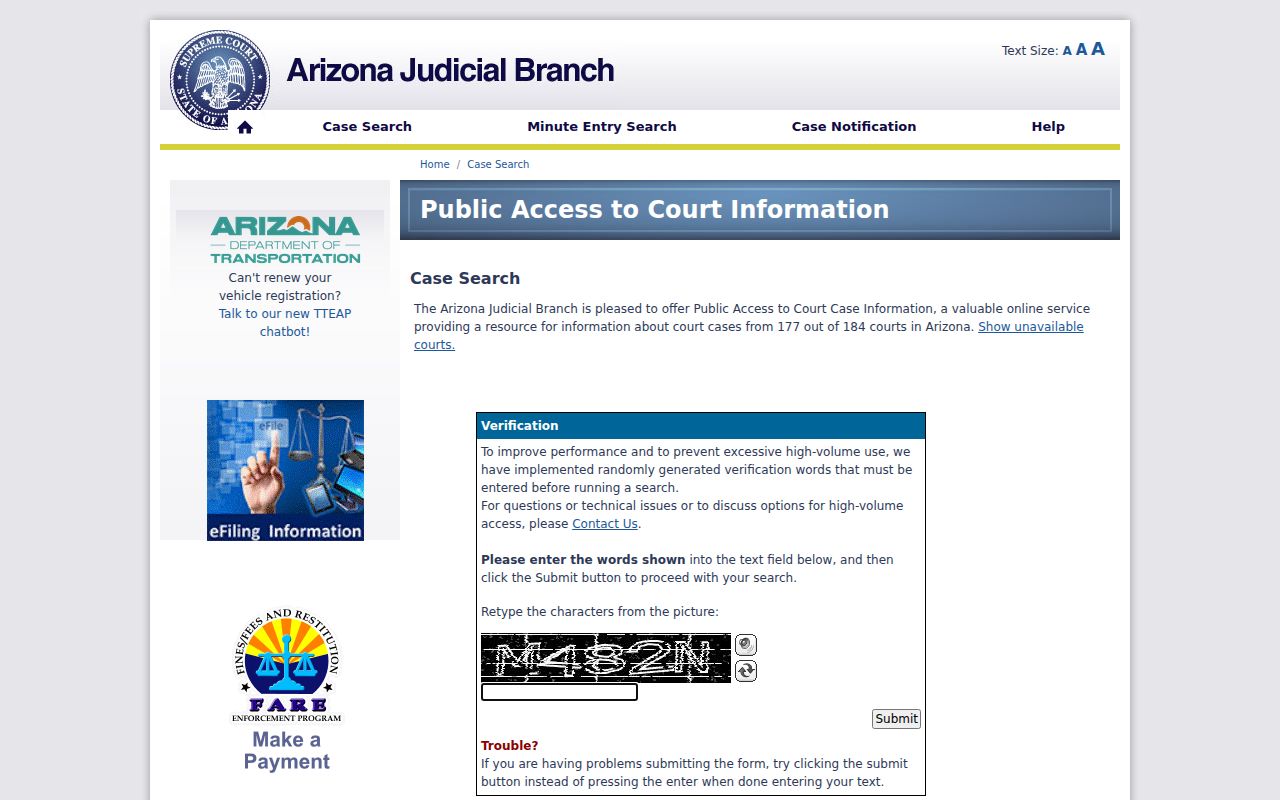
The official record remains with Flagstaff Municipal Court, Flagstaff Justice Court, or the Coconino County Superior Court Clerk. eAccess can supply eligible Superior Court civil and criminal documents filed from July 1, 2010 after account registration. Probate requires direct clerk work because the statewide public lookup excludes it.
Arizona Voter Rules Protect Residents
The voter system is often mistaken for a public resident roll. It is not one. The Arizona Voter Information Portal is an authenticated self-lookup for registration status, districts, notices, ballot-by-mail status, and participation history. It does not disclose how anyone voted. A.R.S. §16-168 limits public voter-file use to political, election, redistricting, and other specifically authorized statutory purposes, while email and sensitive identity fields remain withheld.
The official Arizona voter information lookup is designed around the voter's own record.
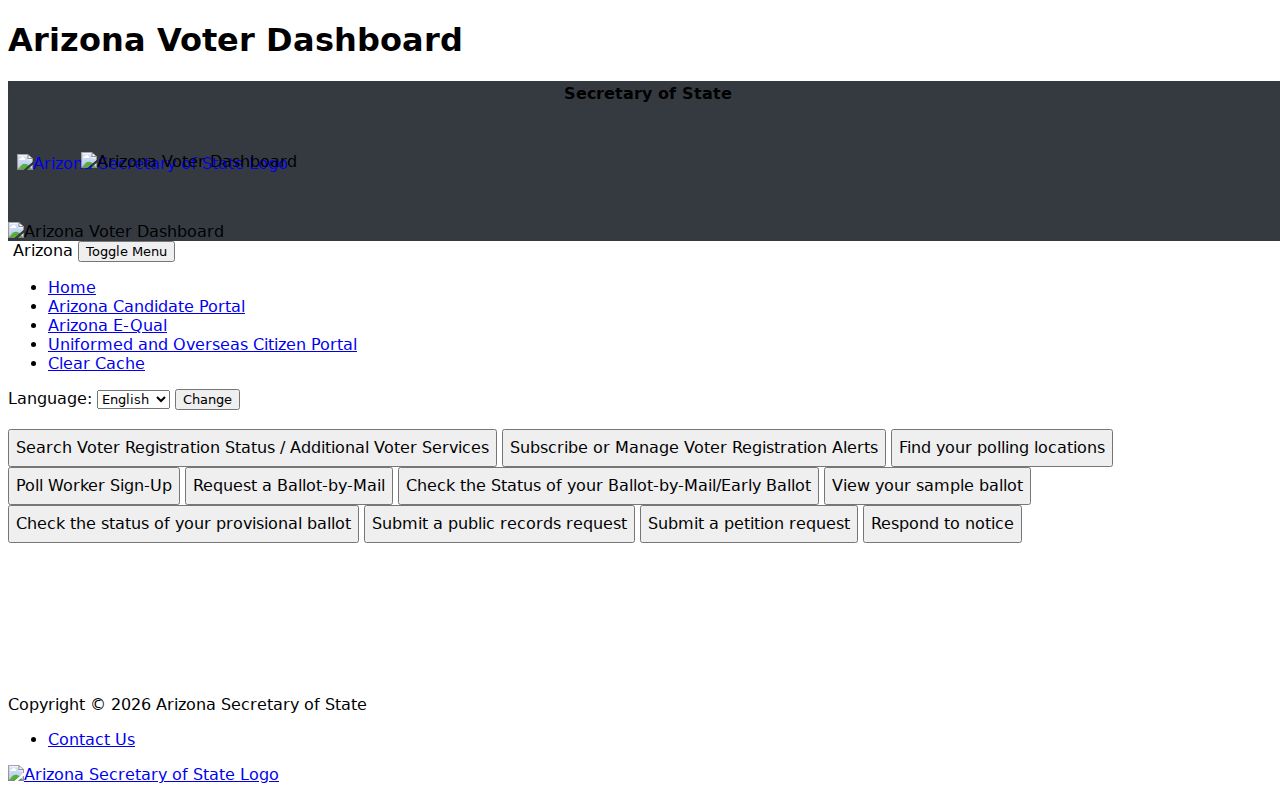
Coconino County also offers an unusual historical route. Its Downwinder request form can seek voter or property evidence of local residency from 1952 through 1964 by resident name, legal description, old address, and years lived in the area. That family-history channel does not make today's full voter file an open street browser.
Use resident records only for a lawful personal purpose. Never use a directory to stalk, threaten, harass, or expose a protected address.
Flagstaff Vital Records Split by Age
Arizona separates public genealogical images from recent certified certificates. Under A.R.S. §36-351, birth records transfer for public archival access after 75 years and death records after 50 years. The free genealogy portal currently displays births from 1855 through 1945 and deaths from 1870 through 1970, but the rolling statute controls archival eligibility when the web display lags. Those images are noncertified.
The Arizona Bureau of Vital Records lists current certificate services and forms.
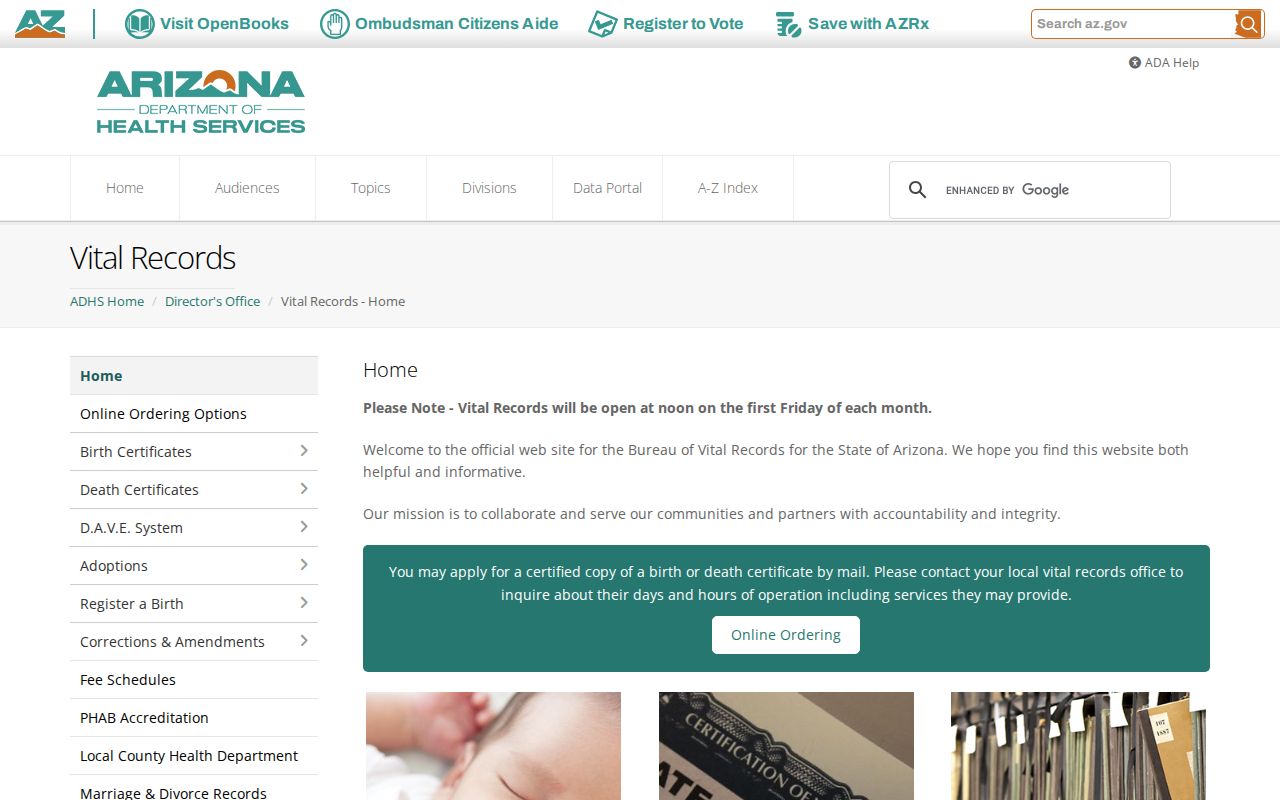
Recent birth and death copies require identity, eligibility, relationship proof, and payment. The Flagstaff registrar is Coconino County Health and Human Services Vital Records at 2625 N King Street. Marriage licenses and divorce decrees come from the Superior Court Clerk because Arizona does not issue state marriage or divorce certificates. Church, cemetery, and newspaper sources can help before statewide registration, but they remain secondary evidence.
Flagstaff Business Names Need Context
Arizona divides business-related name searches between agencies. The Corporation Commission, not the Secretary of State, indexes corporations and LLCs. Its eCorp system can search an entity name, statutory agent, principal, or entity ID, with optional type, status, name-type, and county filters. Results may include formation dates, agent and principal addresses, officers or members, and filed documents. Such an address proves a public business link, not that the person lives there.
The Arizona Corporation Commission entity search provides the entity, agent, and principal-name paths.

The image identifies the official system to use before treating a business affiliation as a lead. The Secretary of State separately handles UCC, notary, and optional trade-name records, while professional boards maintain their own license status and discipline. Search the agency tied to the record type and retain the person's role.
Unclaimed Property Offers Old Leads
Arizona unclaimed property can preserve a historic association between a name and an address after another trail goes cold. The official search and claim process are free. A claim requires proof connecting the claimant to the listed name or address, so a search hit alone does not establish identity, ownership, or present residence. It is most useful as a lead to compare with deeds, probate, old directories, or business filings.
The Arizona Department of Revenue search is the official free route.
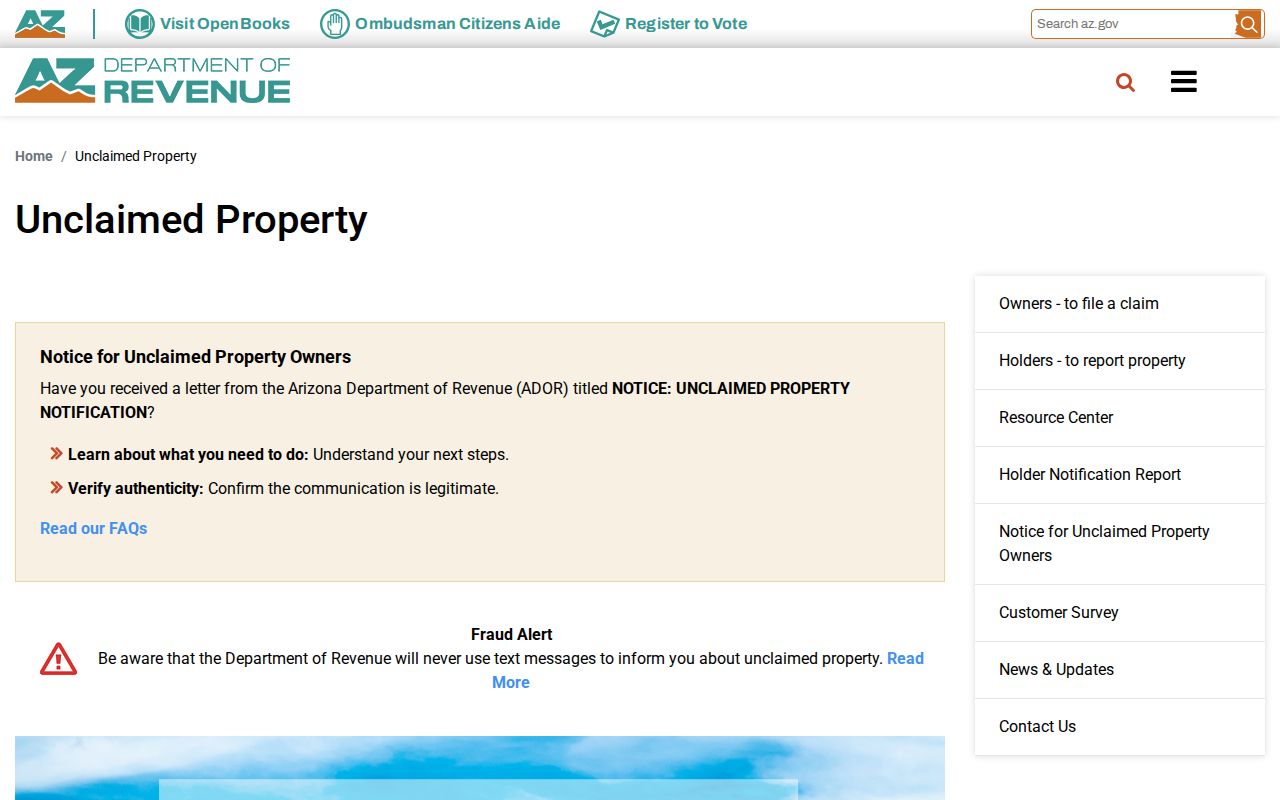
The official page also helps spot a scam. The department says it does not text owners, and no upfront fee is needed to search or file a claim. Verify any notice through the department before sharing identity papers or paying anyone.
Request Missing Flagstaff Public Records
Arizona Public Records Law, A.R.S. §§39-121 through 39-128, is the fallback when an existing city or county record is not indexed online. Any person may request inspection during office hours, subject to statutes, confidentiality, privacy, court rules, and the state's balancing doctrine. The custodian must respond promptly, but Arizona law does not promise a fixed three-day, five-day, or ten-day release.
Ask for an existing record series, not an answer the agency would have to create. Give a date span, subject, address, incident or permit number when known, and the preferred inspection or copy format. City administrative records go to Flagstaff City Clerk/Records. Municipal Court requires its own written route and does not accept phone requests. The consolidated police and sheriff desk needs the report number, date, place, and involved names when available.
Copying and postage may be charged in advance. If material is withheld, a requester may ask for the categories and reasons. A focused request is faster to search and easier to review than a demand for every record containing a common surname.
Historical Flagstaff Residents Directory Shelf
The Flagstaff City-Coconino County Public Library describes digitized city and telephone directories from 1929 through 1986 with gaps, and catalog work has found a 1989 volume. Publishers include The Coconino Sun, Mountain States Telephone and Telegraph, Johnson Publishing, and Mullin-Kille. Coverage changes by year and can include Grand Canyon, Williams, Winslow, Sedona, or Oak Creek, so each page heading matters.
A volume can be searched three ways: alphabetical pages lead from name to address and phone, a telephone locator reverses a number, and a Street and Avenue Guide moves from address to the listed person or business. A full account of editions, abbreviations, and household tracing appears in the Flagstaff city directory. A missing entry is not proof that a family left, especially when years are absent or OCR misses a name.
Directories work best beside census, deeds, and news. The 1950 census is the latest fully public decennial schedule as of 2026. A directory entry between census years can narrow a move, occupation change, spouse link, or phone listing without being treated as a complete roster.
Flagstaff Residents Beyond Printed Books
NAU Cline Special Collections fills gaps that a standard residents directory misses. Its obituary index covers local newspaper titles from 1883 through 2004. Pine and La Cuesta yearbooks cover 1915 through 1968 across the institution's earlier names. The Building Timeline Collection arranges clippings by address, building, and owner. Lumber-company time sheets, club books, church files, a fire-company roll, and civic manuscripts place earlier residents in work and community settings.
Los Recuerdos del Barrio preserves oral histories and photographs from more than 40 Spanish, Basque, Mexican, and Mexican-American Flagstaff families. The collection adds railroad, lumber, sheep, ordnance-depot, and grocery life that may be thin in formal books. These stories should be read with archival context, not flattened into a name list.
Only a fraction of NAU and Arizona Historical Society holdings is online. Cline Special Collections is at 1001 S Knoles Drive, and contact or an appointment is recommended. The public library's Downtown and East Flagstaff branches provide local-history databases, news access, and staff help for directory research.
Flagstaff Record Gaps Can Protect
A missing address may be intentional. Arizona's Address Confidentiality Program gives qualifying survivors a substitute address and confidential mail forwarding that state and local agencies must accept for home, work, and school. Applicants work in person with a registered Application Assistant. Certification lasts five years, and the program reported more than 2,700 active participants in about 1,100 households during 2024.
Separate redaction rules can protect addresses in Recorder, Assessor, Treasurer, voter, court, and motor-vehicle systems for eligible people. Recent vital certificates, sealed matters, juvenile files, utility subscriber data, and driver information also have firm access limits. A responsible resident search stops at that line.
Correct an official mistake through the custodian that created the record. Removing a commercial listing does not erase the courthouse or Recorder source, while an official redaction or correction must follow the law and the keeper's process.
Flagstaff Deed Archives Are Growing
Coconino County's 2023 through 2025 preservation project targeted 1.9 million microfilm images and 420 vault books for scanning, backed by a $1 million federal grant and a $507,849 match. The plan also included server and disaster-recovery work, eventual online access to historic recorded documents, and transfer of microfilm to the State Archives. In May 2025 the Recorder reported continued scanning and a new Archives Technician.
That work makes coverage dates a moving target. The current online name index and image ranges remain the safe starting points, but researchers should recheck the portal and ask staff before assuming an older deed is offline. The county's free Recording Notification service also sends future alerts for newly recorded documents matching a subscribed name or business. It is not retroactive, does not insure title, and does not prevent a recording.
The preservation effort is a rare case where the Flagstaff record trail may improve after the research date. Keep the document number, docket and page, and legal description from every find so an older reference can be located as more material comes online.